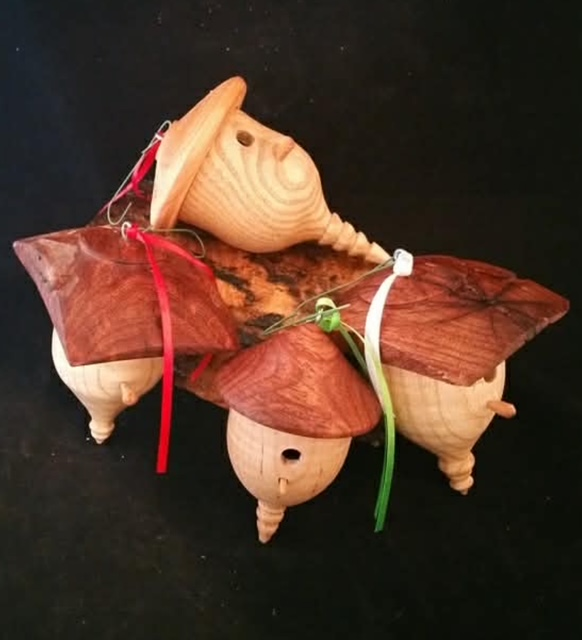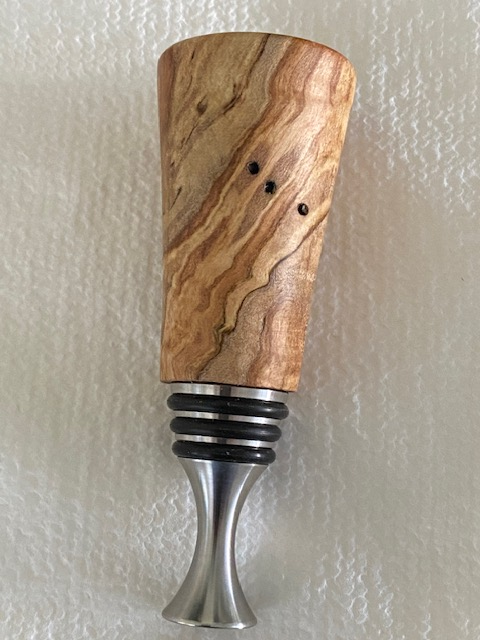
Walk into any woodturner’s shop, and your eyes will inevitably be drawn to the odd, knotted lumps of wood tucked in bins, tucked behind lathes, or resting like forgotten relics on dusty shelves—burls. Misshapen, gnarled, sometimes crusted with bark or riddled with scar tissue, they appear to the untrained eye as damaged goods. But to the maker, they are possibility incarnate. And to anyone who has known pain, they are a mirror—living proof that damage can be the beginning of beauty.
Burls don’t form from peace. They grow when trees are stressed—by injury, disease, insect infestation, or even just harsh weather. Instead of collapsing, the tree reacts. It fights. It adapts. It sends chaotic signals to its cells, telling them to grow, to protect, to hold the line. What emerges is not smooth or symmetrical—but it is resilient. A burl is the record of that effort: a swirl of unpredictable grain, compressed energy, and memory. You won’t see the beauty from the outside. You have to put it on the lathe, place blade to wood, and begin to reveal the story beneath.
That’s where the art happens—not in the pursuit of flawlessness, but in the honoring of what was endured.
As woodturners, we don’t choose the easiest pieces. We choose the ones with history. Perfect wood is fine, but it’s forgettable. A burl makes you work. It demands patience, precision, and presence. The grain tears if you rush it. The voids surprise you. The knots fight back. But if you stay with it—if you listen, feel the weight, move slowly—the burl will offer up something no other piece can: uniqueness. Wild, unruly beauty forged through pressure.
Turning a burl is never just a physical task. It’s emotional. It’s philosophical. It’s an act of empathy, of reverence for survival. When I feel the tool resist against a twisted grain, I’m reminded that resilience isn’t about staying pristine—it’s about growing stronger through the rupture. The lathe spins. The chisel sings. The wood yields. Slowly, the scars become shapes. The cracks get filled with resin that glows. What was once firewood becomes form and function. It becomes art.
Some of the most striking bowls I’ve ever turned began as rejects—burls full of splits, mold, and ragged bark. I’ve filled cracks with gold-dusted resin, left voids exposed like windows to the past, and polished wildgrain until it shimmered like flame. And every time, I think: this is what healing looks like. Not erasure. Integration.
If life has left its marks on you—if you’ve been battered by grief, weighed down by trauma, or reshaped by struggle—remember the burl. Your strength is not the absence of pain. It’s the presence of something new that grew in response to it. Your beauty is not in the smooth surface—it’s in the way your scars catch the light.
So the next time you see a burl, know this: it didn’t grow in spite of the storm—it grew because of it. And in the hands of someone who sees its worth, it’s not discarded. It’s transformed.